



Despite the importance vitamin D has on our health, many people are not getting enough of the nutrient in their diet. In fact, an estimated 1 billion people worldwide have vitamin D deficiency. [1] Luckily, vitamin D deficiency is preventable and treatable. This article covers what you need to know about vitamin D deficiency to ensure you get enough vitamin D each day.
What is vitamin D deficiency?
Vitamin D deficiency occurs when the body has insufficient levels of vitamin D to support key functions, such as bone health and immune defense. Since vitamin D helps the body absorb calcium, low levels can weaken bones and increase the risk of conditions like osteoporosis[2]. Additionally, it plays a role in immune regulation, and a deficiency may make the body more susceptible to infections and autoimmune diseases.
Read more about vitamin D and immunity here.
Vitamin D levels are measured with a blood test that checks the body’s main form of stored vitamin D. The results are classified as:
- Deficient: Below 30 nmol/L – Increases risk of bone and immune issues.
- Insufficient: 30–50 nmol/L – May not be enough for optimal health.
- Sufficient: 50–125 nmol/L – Considered a healthy level.
- Excessive: Above 125 nmol/L – May cause health risks due to high calcium levels.
Why does vitamin D deficiency increase with age?
As we age, the body produces less vitamin D in response to sunlight, making older adults more prone to deficiency. Other factors, such as reduced dietary intake, lower absorption efficiency, and spending more time indoors, also contribute to the problem. Deficiency in older adults is linked to bone loss, muscle weakness, and an increased risk of chronic diseases.
Since maintaining sufficient vitamin D levels is crucial for bone strength, immune function, and overall health, many people—especially older adults—benefit from vitamin D3 supplement or regular testing with a vitamin D self-test kit and get your results within two weeks, allowing you to take action if needed.
How much Vitamin D do I need?
The recommended daily intake of vitamin D depends on age, geographic location, and individual health conditions. The National Institutes of Health (NIH) suggests 15-20 mcg (600-800 IU) for adults, with higher amounts for older individuals. Some health organizations recommend even higher doses, especially in regions with limited sunlight.
Here are some general guidelines:
Infants and young children (0-4 years): 10 µg (400 IU) daily (often as vitamin D drops).
Children and adults up to 70 years: 15 µg (600 IU) daily.
People over 70 years: 20 µg (800 IU) daily.
Many choose a supplement of 25-50 µg (1000-2000 IU) daily, especially in winter when sun exposure is low.
What are the signs of vitamin D deficiency?
Not everyone who is vitamin D deficient experiences symptoms. In adults, the most common symptoms are:
- Fatigue
- Muscle aches or cramps
- Bone pain
- Depression
Who is most at risk for deficiency?
Various factors can increase your risk of vitamin D deficiency, including:
- Age: Our body makes less vitamin D as we age, which puts people over 65 at an increased risk of vitamin D deficiency.
- Time spent indoors: People who spend most of their time indoors or are unable to get natural sunlight exposure are at an increased risk of vitamin D deficiency.
- Skin color: People with darker skin tones absorb less vitamin D from sunlight than people with fair skin, which puts them at an increased risk of vitamin D deficiency.
How can I increase my vitamin D intake?
There are various ways to increase your vitamin D levels.
First, you can get vitamin D through your diet. Foods that are good sources of vitamin D include cheese, mushrooms, egg yolks, and fish like salmon, tuna, swordfish, and sardines. You can also eat foods that contain fortified vitamin D like milk, cheese, and cereals.
Getting exposure to sunlight is another good way to increase your vitamin D levels. However, the best way to treat vitamin D deficiency is through supplementation to make sure you get the right amount.
How long does it take to recover vitamin D deficiency?
Recovering from vitamin D deficiency depends on factors like the severity of the deficiency, individual health conditions, and consistency in following the treatment plan. Generally, it can take from a few weeks to several months to restore adequate vitamin D levels.
A study published in the Journal of the American Medical Association investigated the effects of high-dose vitamin D3 supplementation in critically ill patients with vitamin D deficiency. Participants received an initial large dose of 540,000 IU (13,500 µg) of vitamin D3, followed by monthly maintenance doses of 90,000 IU (2,250 µg) for five months. The study found that this regimen effectively increased serum 25-hydroxyvitamin D levels. However, it’s important to note that this study focused on a specific patient population under medical supervision.
For the general population, especially those with mild to moderate deficiency, treatment often involves daily supplementation with doses ranging from 1,000 to 2,000 IU (25-50 µg), depending on individual needs and healthcare provider recommendations.
How to get vitamin D in winter?
In winter, when sunlight exposure is limited, especially in northern regions, maintaining adequate vitamin D levels through diet and supplements becomes important. Foods like fatty fish (salmon, mackerel), egg yolks, and fortified products (milk, cereals, and some plant-based alternatives) provide some vitamin D, but it can be difficult to get enough through diet alone. Supplements offer a reliable way to ensure you get the right dose, helping to maintain optimal levels year-round.thcare professional before starting any supplementation.
Read our full vitamin D3 guide here: Vitamin D3 and anti aging – The 2025 longevity guide
Understanding vitamin D3 bioavailability
Vitamin D absorption is crucial for its effectiveness. Factors such as gut health, dietary fat intake, and the type of vitamin D supplement can impact how well it is absorbed. Traditional vitamin D supplements are not always fully absorbed, especially in individuals with digestive issues. Liposomal vitamin D3 may be a more effective solution, as it is encapsulated in a fat membrane, enhancing its absorption in the body.
A clinical study published in the Journal of Steroid Biochemistry and Molecular Biology in 2022 examined the difference between liposomal vitamin D3 and a traditional oil-based formulation. The study found that liposomal vitamin D3 led to a faster increase in blood levels of calcidiol (25(OH)D3) compared to the oil-based version. This suggests that liposomal technology can improve the bioavailability of vitamin D3, ensuring more efficient absorption, particularly in individuals with severe deficiencies.
Read more about liposomal techology here.
Conclusion
Vitamin D is essential for overall health, yet many people are not getting enough due to limited sun exposure, aging, or dietary habits. Deficiency can lead to weakened bones, muscle weakness, fatigue, and a higher risk of infections. Fortunately, vitamin D levels can be managed through a combination of sun exposure, diet, and supplementation.
For those at risk of deficiency, especially older adults and individuals with limited sunlight exposure, a vitamin D supplement can be a practical solution. Liposomal vitamin D3 offers improved absorption, making it a highly effective option for maintaining optimal levels.
If you are unsure whether you are getting enough vitamin D, consider testing your levels with a vitamin D self-test kit. With results available within two weeks, you can take informed steps to support your health and well-being.
You might also find this interesting: Clinical trial: Can omega-3, vitamin D, and exercise slow biological aging?
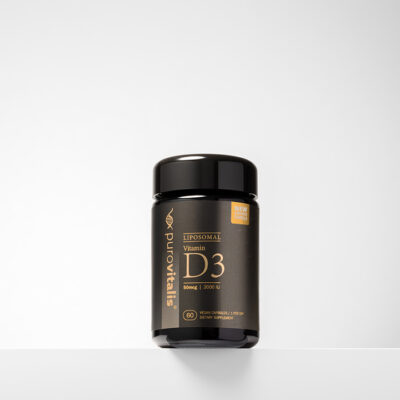
Vitamin D3 2000 IU liposomal delivery maximum bioavailability Immune Enhancer
Strengthen your immune system and promote bone health with Liposomal Vitamin D3! Try it out!
Share: