Most readers arrive here with a simple question: Which should I try—NMN vs NR?
Both feed the same salvage pathway that keeps cellular NAD⁺ topped up. NR converts to NMN inside cells, and NMN is then one step from NAD⁺. Human trials show that both raise blood NAD⁺, but the details differ by study design, dose, and population.
In this article
One-minute summary
- Both precursors work in people. Multiple randomized trials: NR reliably elevates whole-blood NAD⁺; NMN raises NAD⁺ and shows functional signals in specific groups (e.g., gait speed in older adults; muscle insulin sensitivity in women with prediabetes).
- Headlines from recent trials. NR improved 6-minute walk distance in peripheral artery disease over 6 months; NMN maintained walking speed and improved sleep quality in older adults at 250 mg/day.
- Mechanism. NR → NMN → NAD⁺; NMN → NAD⁺. Same pathway, different entry point.
- Which is “better”? Depends on your goal and tolerance. If you want the most human data today, NR has more total adult RCTs; if you’re focused on mobility or insulin sensitivity signals, NMN trials are encouraging. Consider a short, structured self-trial (see plan below).
Dive deeper: What is NAD+ simple guide

What actually differs between NMN vs NR?
Pathway position. NR is converted by NR kinases to NMN, which NMNATs convert to NAD⁺; NMN is already one step away. In tissues where the salvage pathway dominates, either route can work.
Evidence profile.
- NR: many human trials across healthy, older, and patient groups; consistent NAD⁺ rises; safety studied up to 2,000 mg/day in select cohorts. Functional outcomes vary by population.
- NMN: growing human data; consistent NAD⁺ rises; signals for walking speed, aerobic capacity with training, sleep quality, and muscle insulin sensitivity in specific groups.
Note on public commentary:
David Sinclair has publicly said he takes NMN and has commented that NR became common in early studies largely for availability/cost reasons—not as a proof that it’s superior. Treat this as context, not medical advice.
Learn more about NAD+ precursors here,
What human studies show
NMN: 5 notable studies
- NAD⁺ rises + mobility in healthy older men 12-week, randomized, double-blind trial (250 mg/day). NAD⁺ increased; nominal improvements in gait metrics; well tolerated. npj Aging Mech Dis.
- Insulin sensitivity in women with prediabetes Placebo-controlled RCT: NMN improved skeletal-muscle insulin sensitivity and muscle remodeling markers. Science (2021).
- Aerobic capacity with training 6-week, randomized, double-blind trial in amateur runners: NMN plus training improved VO₂-related measures vs training alone. J Int Soc Sports Nutr.
- Sleep quality and performance timing Randomized, double-blind trial in older adults: time-of-day NMN improved sleep/fatigue measures; explored physical performance. Nutrients (2022).
- Older adults: NAD⁺ up, walking speed preserved, sleep better 12-week, randomized, double-blind, placebo-controlled trial (250 mg/day) showed increased NAD⁺, maintenance of walking speed, and improved sleep quality. GeroScience (2024).
Preclinical to know:
Sinclair’s lab showed reversing a pseudohypoxic, nuclear–mitochondrial communication defect in old mice by restoring NAD⁺ (NMN featured). Capillary density and endurance also improved in aging mice with NMN. These are mouse data, not human endpoints.
Learn more about Nicotinamide Mononucleotide (NMN)
NR: 5 notable studies
- NAD⁺ up in healthy midlife/older adults + BP signal 6-week, randomized, double-blind, crossover trial: NR elevated blood NAD⁺; exploratory reductions in systolic BP/arterial stiffness in those with higher baseline BP. Nature Communications (2018).
- Skeletal muscle NAD⁺ metabolome + lower inflammatory cytokines 21-day, randomized, double-blind, crossover trial in aged men (1 g/day): muscle NAD⁺ metabolome increased; circulating inflammatory cytokines decreased. Cell Reports (2019).
- Peripheral artery disease: walking performance Phase II RCT (n=90): NR improved 6-minute walk vs placebo at 6 months; resveratrol added no benefit. Nature Communications (2024).
- Heart failure (HFrEF): safety + NAD⁺ up Randomized, double-blind pilot in 30 patients: 1,000 mg twice daily appeared safe and roughly doubled whole-blood NAD⁺. JACC: Basic to Translational Science (2022).
- Kidney/AKI settings and NRPT safety In patients at risk for AKI, NR + pterostilbene increased whole-blood NAD⁺ with acceptable safety; larger efficacy trials are ongoing. BMC Nephrology (2020).
Want to learn more about NR? Look at our extended guide.
Safety notes
Across trials above, both compounds were generally well tolerated over weeks to months. Niacin-like flushing is not typical with NR or NMN at the doses studied. GI symptoms appear more often when NR is combined with resveratrol than with NR alone. Longer studies are in progress for durability and rare events.
What David Sinclair says about NMN vs NR
On conversion: “NR gets converted into NMN first and then into NAD… NR and NMN have both been shown to raise NAD levels in animals and in humans.” — interview with Rhonda Patrick.
Keep in mind:
personal statements are not clinical guidance. The choice still comes down to your goal and how you respond.
Simple buyer’s guide
Start with your goal.
If you want the most human data today: start with NR at doses used in trials (e.g., 300–1,000 mg/day). Track sleep, afternoon energy, recovery, and any wearable metrics for 8–12 weeks.
If your focus is mobility, sleep, energy, or insulin sensitivity signals: consider NMN at 250–600 mg/day, aligned with the trials listed.
TIP:
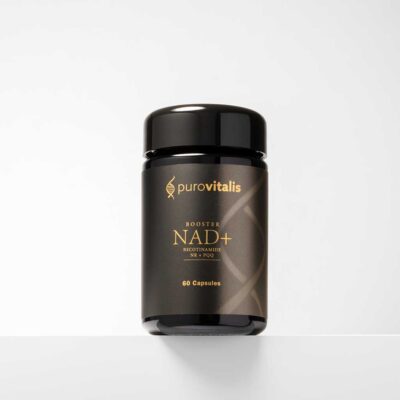
Still unsure? Run a simple A/B at home—Month 1: Purovitalis NAD⁺ Booster Capsules (NR + NAM). Month 2: Purovitalis Liposomal NMN. Keep lifestyle steady; compare your logs. Everyone’s baseline and response differ—this removes guesswork.
You might also like: NAD vs NAC comparison
Is one clearly better?
No clear winner across all outcomes. Both elevate NAD⁺. Pick based on your goals, tolerance, and budget—then measure.
Can I stack NMN and NR?
They feed the same pathway; combining isn’t proven to outperform using one consistently. Most trials use a single precursor.
What did David Sinclair say?
He’s stated publicly that he takes NMN and has noted NR’s early study lead was partly due to availability. This isn’t medical advice; it’s context.
How long until I notice anything?
Trials typically run 6–12 weeks. Give your chosen format enough time and track simple metrics.
References
- Martens CR, et al. Nature Communications (2018): randomized, double-blind, placebo-controlled crossover trial; NR raised NAD and showed BP/arterial stiffness signals in those with higher baseline BP.
- Elhassan YS, et al. Cell Reports (2019): aged men; muscle NAD metabolome up; inflammatory cytokines down.
- McDermott MM, et al. Nature Communications (2024): PAD trial; NR improved 6-minute walk at 6 months.
- Khan MS, et al. JACC: Basic to Translational Science (2022): HFrEF pilot; safety and whole-blood NAD up.
- Rhee EP, et al. BMC Nephrology (2020): hospitalized AKI; NRPT raised NAD; stepwise safety.
- Yoshino J, et al. Science (2021): postmenopausal women with prediabetes; improved skeletal-muscle insulin sensitivity.
- Igarashi K, et al. npj Aging and Mechanisms of Disease (2022): older men; NAD up; gait signals; 250 mg/day.
- Liao B, et al. J Int Soc Sports Nutr (2021): amateur runners; aerobic capacity with training.
- Kim M, et al. Nutrients (2022): time-of-day NMN improved sleep/fatigue measures.
- Morifuji M, et al. GeroScience (2024): older adults; NAD up; maintained walking speed; better sleep.
- Gomes AP, Sinclair DA, et al. Cell (2013): restoring NAD reversed a nuclear-mitochondrial signaling defect in old mice.
- Das A, et al. / Sinclair DA. Cell (2018): NMN improved blood flow and endurance in aged mice via endothelial SIRT1.
- FoundMyFitness interview with David Sinclair: NR converts to NMN first, both raise NAD in animals and humans.